
Last updated October 17, 2026
 Tile roofing
 Architectural shingles
 GAF
GAF Owens Corning
 Flat & low-slope
Free roof inspection with deck photos before we talk money - GAF and Owens Corning certified installation
Roofing Warning Signs: A Ventura Homeowner’s Reference Guide
Most roofing warning sign guides tell you to look for missing shingles or water pouring through the ceiling. By then, the failure has already happened. What actually costs Ventura homeowners money is what happens in the months and years before the obvious damage shows up. A musty attic smell in August, a subtle line of discolored granules along a west-facing slope, a flash of green oxidation on a flashing edge visible from the sidewalk. These are the signals that matter. This guide covers what to look for from the ground, what interior clues mean structurally, which granule patterns signal real trouble, and how to separate cosmetic aging from active failure. In Birchbark Roofing Ventura home we’ve walked thousands of these inspections, and the patterns repeat across every neighborhood in this city.
Styles & brands we work with
Quick Answer
The roof warning signs a Ventura homeowner should not ignore include: granule loss concentrating on south and west-facing slopes, lifted or oxidized flashing visible from the ground, musty attic smells during August and September (marine-layer moisture cycling beneath the ridge), yellow or brown discoloration at top-floor ceiling corners, and dark valley lines where shingles are wearing through. Any of these on a roof older than 12 years warrants a written assessment. Most are visible without setting foot on a ladder.
Table of Contents
- The Ground-Level Visual Inspection: Five Signs Visible from the Street or Yard
- Interior Warning Signs, Sorted by Location
- Salt-Air Corrosion on Metal Components: What Ventura’s Climate Does Differently
- Granule Loss Patterns That Matter: Random vs. Directional
- Cosmetic vs. Structural: How to Tell Without Climbing the Roof
- The Ventura Climate Factor: Marine Layer, Santa Anas, and Salt Air
- Roof Age by Material: When Warning Signs Become Replacement Signals
- Common Mistakes to Avoid
- When to Call a Professional
- Frequently Asked Questions
- The Bottom Line
The Ground-Level Visual Inspection: Five Signs Visible from the Street or Yard
You do not need to climb onto your roof to spot most developing problems. A slow walk around the perimeter of your home with a pair of binoculars, or even a phone camera zoomed in, reveals more than most homeowners expect. Here are the five specific things to look for from the ground in Ventura, where bright coastal light makes certain defects easier to see than in overcast climates. For a deeper dive, see our Complete Guide to Roofing in Ventura.
- Flashing lift on the chimney or sidewall. Step flashing is the bent metal where the roof meets a vertical surface. When it starts pulling away, even by a quarter inch, you’ll see a shadow line or a gap along the mortar or siding joint. From the ground, this looks like a thin dark line where there should be a clean metal edge. Flashing lift on a Ventura home frequently starts on the windward side, which is usually the west or northwest face, after a few seasons of afternoon onshore winds.
- Valley discoloration. Roof valleys channel the most water on the entire roof, and they’re often visible from the front yard on two-story homes. A valley that looks distinctly darker than the surrounding shingle fields, especially in a line running from ridge to eave, is showing wear from concentrated water flow. On asphalt shingle roofs in Ventura, valley staining often appears first on the north-facing roof plane where marine-layer moisture lingers longer.
- Wavy shingle lines across the field. When roof decking begins to swell or delaminate from trapped moisture, the shingles above it lose their flat plane. From the street, you’ll see a subtle ripple or wave that runs in a band across the roof, often between two rafters. This is not a shingle problem. It’s a decking problem, and it’s one of the clearest ground-level indicators that moisture has been working beneath the surface.
- Green or black streaking at the eaves. In a coastal climate with morning fog for a third of the year, organic growth on the north and east eaves is more common than many homeowners realize. By itself, moss or algae streaking is cosmetic. But streaking that appears alongside granule accumulation in the gutters (visible from the ground as a dark sludge line at the gutter lip) suggests the shingle surface is actively wearing away, not just dirty.
- Granule accumulation at downspout elbows. After a rain, walk to where your downspouts discharge. A visible fan of dark granules on the concrete or soil below is a direct read on surface wear. A small amount is normal for older roofs. A heavy accumulation, especially if it repeats after consecutive rains, means the shingles are shedding their protective layer faster than weather alone would explain.
If you spot any of these five signs, the next step is not a ladder. It’s a written assessment from a Roofing Company in Ventura that can document what’s happening and tell you whether you’re looking at maintenance or replacement territory. Our technicians photograph everything from the ground and from the roof edge, so you see the same evidence we do before any work is proposed.
Interior Warning Signs, Sorted by Location
Interior warning signs are the most overlooked signals in roofing because homeowners tend to explain them away. A smell gets blamed on the dog. A corner stain gets painted over. A skylight drip gets called a window problem. Each location inside your home corresponds to a different likely point of failure on the roof above it. Knowing that mapping changes what you’ll catch and how early.
In the attic: A musty or earthy smell in the attic during August and September, when Ventura’s marine layer pushes moist air inland every night, often signals condensation cycling under the ridge vent. You may not see any stain yet. The smell is the trapped humidity interacting with the wood and insulation before it condenses visibly. Check for damp insulation near the ridge, which feels heavier and cooler than dry insulation. Also look for rust on the visible nail points poking through the decking. Rusted nail tips in the attic are an early-stage indicator of trapped moisture, sometimes visible months before any ceiling stain appears below.
Top-floor ceiling corners: Stains that appear in the corners of top-floor rooms, especially where exterior walls meet the ceiling, typically point to a flashing issue at the roof-to-wall junction above, or to wind-driven rain entering through a small gap that only opens during specific wind conditions. In Ventura, the relevant wind direction is most often out of the west or southwest. If your west-facing upstairs corner shows a faint yellow or brown tint after a winter rain sequence, don’t wait for the stain to darken. The water is entering intermittently, and intermittent leaks are the most expensive kind because they spread horizontally through insulation before they announce themselves.
Around skylights: Skylight flashing fails in a very specific sequence. The first sign inside is usually a faint water line or drip streak on the drywall directly below the skylight curb. The second sign is a darkening of the drywall or trim at the skylight’s lower edge. By the time water drips visibly from the skylight itself, the flashing seal has been compromised for a full season or longer. The relevant question in Ventura is how old the skylight is relative to the roof. Skylights installed when the roof was new should be re-flashed when the roof is replaced, and many homeowners make the mistake of leaving the skylight untouched, creating a guaranteed leak point around year eight to ten of the next roof’s life.
Near exterior walls: Discoloration running down the interior surface of an exterior wall, starting at the top and descending, is a wall-cap or parapet flashing failure, not a field-of-roof failure. In many Ventura homes built in the 1970s through 1990s, the wall cap was installed over a single layer of felt with no ice-and-water shield, and after decades of salt air and thermal cycling, the cap metal pulls away just enough to let water track down the inside face of the wall. The interior stain often appears several feet below the actual entry point.
Salt-Air Corrosion on Metal Components: What Ventura’s Climate Does Differently
A steel flashing on a home in Bakersfield rusts the way most people picture rust: reddish-brown, flaky, spreading evenly across the exposed surface. A copper or galvanized flashing on a Ventura home fails differently. The constant presence of airborne salt from the Pacific changes the corrosion chemistry and the visual signature of failure. If you know what salt-air oxidation looks like, you’ll spot problems years earlier than a homeowner looking for classic rust.
On galvanized steel step flashing, Ventura salt air produces a dull gray bloom first, not orange rust. The zinc coating sacrificed itself to the salt exposure, and the surface turns matte and powdery. Underneath that bloom, the steel is thinning, but it won’t turn orange until the zinc is fully consumed, which can take a decade or more. By the time a Ventura homeowner sees classic red rust on step flashing, the metal has been compromised for years.
On copper flashing, which many higher-end Ventura homes in neighborhoods like Ondulando, College Area, and Clearpoint were built with, salt-air oxidation produces a green patina that many homeowners mistake for harmless aging. In an inland climate, green patina on copper is a sign of durable, long-lived metal doing what copper does. In Ventura’s salt air, that green layer is capturing chlorides at the molecular level, and over time, chloride-induced pitting can eat through the copper from the outside in. What looks like a beautiful, historic patina can be the early visual signature of a pinhole leak developing. The tell is the location: patina on the flat surfaces of copper flashing is normal aging; bright green crystallization at the fold lines, corners, and seam overlaps is active corrosion and warrants a written assessment.
The most common salt-air failure point we see in Ventura is on the west and southwest-facing roof planes, within two miles of the water. The onshore afternoon breeze carries a fine salt mist that settles on the metal and dries, concentrating chlorides in the seams. Flashing on the east face of the same house, protected from the prevailing wind, can look nearly new while the west-face flashing is actively failing. If your home sits within two miles of the coast in Ventura, schedule a visual check of your west-facing flashing every three years, even if the roof is young.
Granule Loss Patterns That Matter: Random vs. Directional
Granules are the ceramic-coated stone particles embedded in the asphalt surface of your shingles. They exist to shield the asphalt from UV light. When granules go, the asphalt is exposed, and from that point the shingle life drops sharply. But not all granule loss tells the same story. The pattern matters as much as the amount.
Random granule shedding is what you find on a roof that is simply aging. Granules appear evenly distributed in the gutters across all roof faces. The roof surface looks uniformly lighter than it did when installed, and when you look at the shingles closely (in a gutter or from the roof edge), there’s no clear orientation to the wear. This is normal aging on a fifteen-year roof. It tells you the roof is in its final third of usable life, but nothing is failing abnormally. A roof with random shedding can often serve several more years with monitoring, provided there are no other warning signs.
Directional granule loss is a different signal entirely. When granules are disappearing predominantly from the south and west-facing slopes, leaving those roof planes visibly lighter than the north and east planes of the same roof, the shingles are showing UV-side degradation. In Ventura, the south face gets the direct midday sun and the west face gets the hot afternoon sun combined with onshore wind. On average, south and west-facing shingle fields in Ventura age 30 to 40 percent faster than the north and east fields on the same home. If you see a distinct color difference between roof planes, you’re not imagining it. The roof is wearing unevenly, and uneven wear means the failing planes will need attention while the sheltered planes still look serviceable.
The more specific and urgent pattern is bare spots with exposed asphalt. When granules have worn away in defined patches, leaving shiny black or dull gray asphalt visible, the protective layer is gone in those areas. UV now hits the asphalt compound directly. Under Ventura’s sun, exposed asphalt can begin to crack and erode within a single summer. If you see bare spots from the ground or the gutter side, the roof is in active failure, not slow aging.
Cosmetic vs. Structural: How to Tell Without Climbing the Roof
Most homeowners overreact to cosmetic aging and underreact to structural problems. The distinction matters because one is a cleaning or monitoring question, and the other is a repair or Roof Replacement in Ventura question. Getting it wrong in either direction costs you money, either through unnecessary work or delayed maintenance.
Cosmetic issues worth monitoring but not urgent: uniform algae streaking on north-facing planes, a light and even granule layer in the gutters on a roof over ten years old, small patches of lichen on shaded eaves that don’t penetrate the shingle surface, and general shingle color fading. These conditions tell you the roof is aging on schedule. You can monitor them once a year from the ground and act when signs of deeper wear appear.
Structural issues requiring an immediate written assessment: shingles that are curling at the edges and lifting away from the deck, shingles that have cracked through completely and expose the fiberglass mat, granule loss so heavy that you can see the outline of the underlying shingle tabs through the surface, any visible sag in the roofline when you sight down the ridge from the street, and flashing that has lifted visibly away from the wall or chimney. These are not monitoring situations. Water is either entering the roof system now or will be within the next rainy season.
A simple at-home test for shingle brittleness, without climbing, is to check your gutters after a windy day. If you find entire shingle tabs, complete with their nailing strip, in the gutter or on the ground, the shingle body has lost flexibility and is breaking away. That is a structural signal, not a cosmetic one. At Birchbark, we include a written price before any work starts, so when you call us for an assessment, you’ll know exactly what the findings mean in dollars before you make a decision. Not sure whether to tackle maintenance yourself or call a pro? Read our DIY vs Professional Roofing: The Ventura Homeowner’s Decision Guide.
The Ventura Climate Factor: Marine Layer, Santa Anas, and Salt Air
Ventura’s roof problems are not generic. This city’s specific climate signature, a coastal marine layer that rolls in most nights from late spring through early fall, combined with occasional Santa Ana wind events off the mountains to the east, and a persistent salt-air environment, produces failure patterns that a roofer from Valencia or Thousand Oaks may not see as often. Understanding how your roof responds to these three forces changes how you interpret every warning sign in this guide.
The marine layer is the silent player. From May through September, moist air moves in from the Pacific and condenses on the north-facing roof slopes, especially in the hours before dawn. If your attic ventilation is undersized, that moisture moves through the ridge and soffit vents into the attic, where it condenses on the underside of the decking. The result is the musty attic smell described earlier, and in severe cases, visible condensation beads on the roof sheathing. Homes in the hills above Ventura, in communities like Foothill and Hidden Valley, experience more of this than homes right on the flats downtown, simply because the marine layer sits at different elevations on different nights.
Santa Ana winds, which typically arrive in the fall, reverse the airflow. Air comes down from the canyons to the east, hot and dry, and hits the roof from an unusual direction. The stress on the roof is mechanical: gusts hitting the gable ends and lifting the leading edge of shingles that have lost seal strength. After a Santa Ana event, walk the east and northeast side of your home and look at the ground beneath the roof edge. Loose granules, small shingle tabs, and pieces of ridge cap on the ground are direct reports of wind damage. In our experience, homeowners check the west side for storm damage and miss the east side entirely.
Salt air does two things to a roof. It accelerates the corrosion of metal flashing and fasteners (see the salt-air section above), and it deposits a fine salt film on flat membrane surfaces like those around vents, skylights, and low-slope sections. That film is hygroscopic, meaning it attracts moisture. Over years, the areas around roof penetrations see a micro-environment of salt, moisture, and UV that ages sealants two to three times faster than the same sealant on an inland roof. Homeowners in the Pierpont and Midtown areas, closer to the water, should budget for flashing and sealant re-work on a shorter cycle than the rest of the city.
Roof Age by Material: When Warning Signs Become Replacement Signals
Every warning sign means something different depending on the material and the age of your roof. A granule-loss pattern that’s a monitoring item at year ten is a replacement signal at year eighteen. Here’s how to calibrate what you’re seeing against the material on your roof.
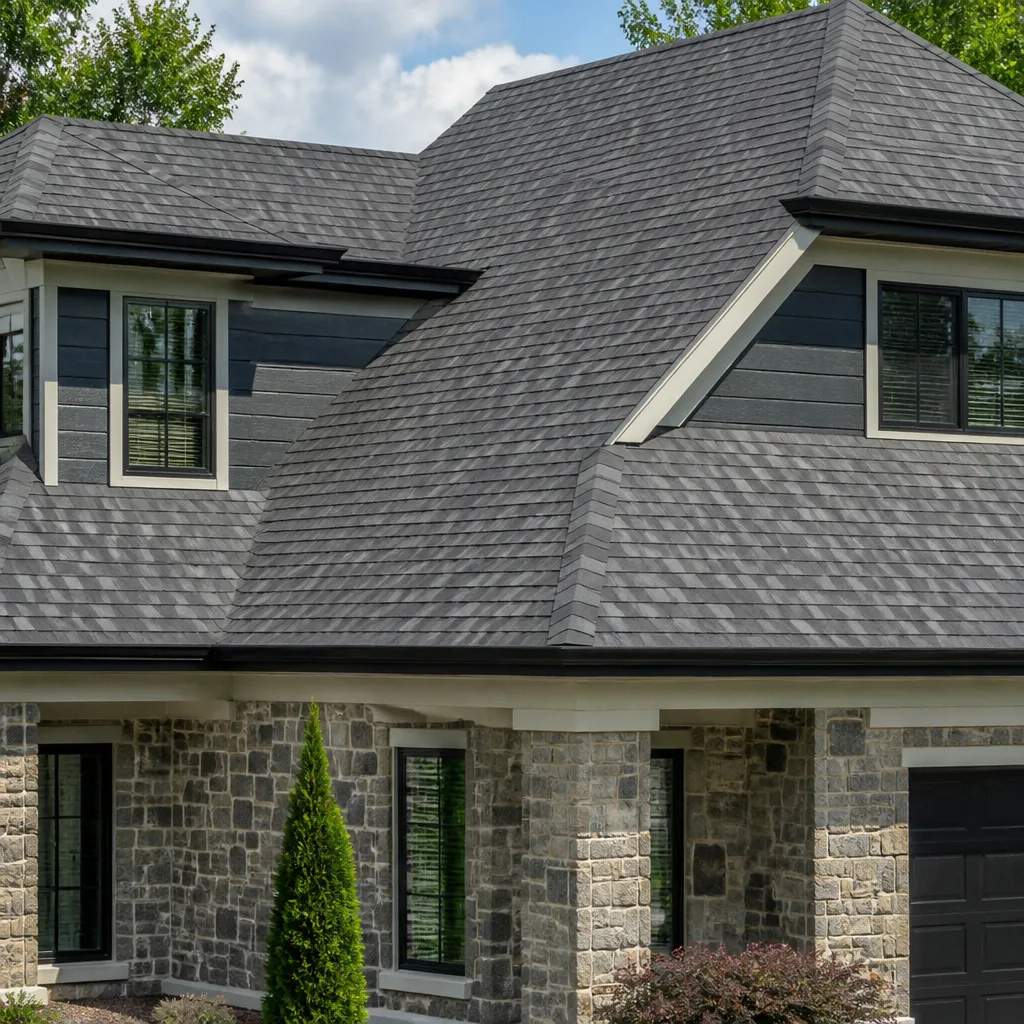
Asphalt shingle roofs (the most common in Ventura): A standard three-tab shingle from brands like Owens Corning carries a realistic Ventura service life of 15 to 18 years on south and west exposures. Architectural or dimensional shingles from CertainTeed or IKO typically run 20 to 25 years, although the south and west planes can show significant wear by year 16 to 18. On any asphalt roof over 12 years old, directional granule loss, curling edges, or visible asphalt bare spots are replacement signals, not repair triggers. At that age, spot repairs on one plane often become a repeated expense, and the sheltered planes are closer to the end of their service life than the appearance suggests.
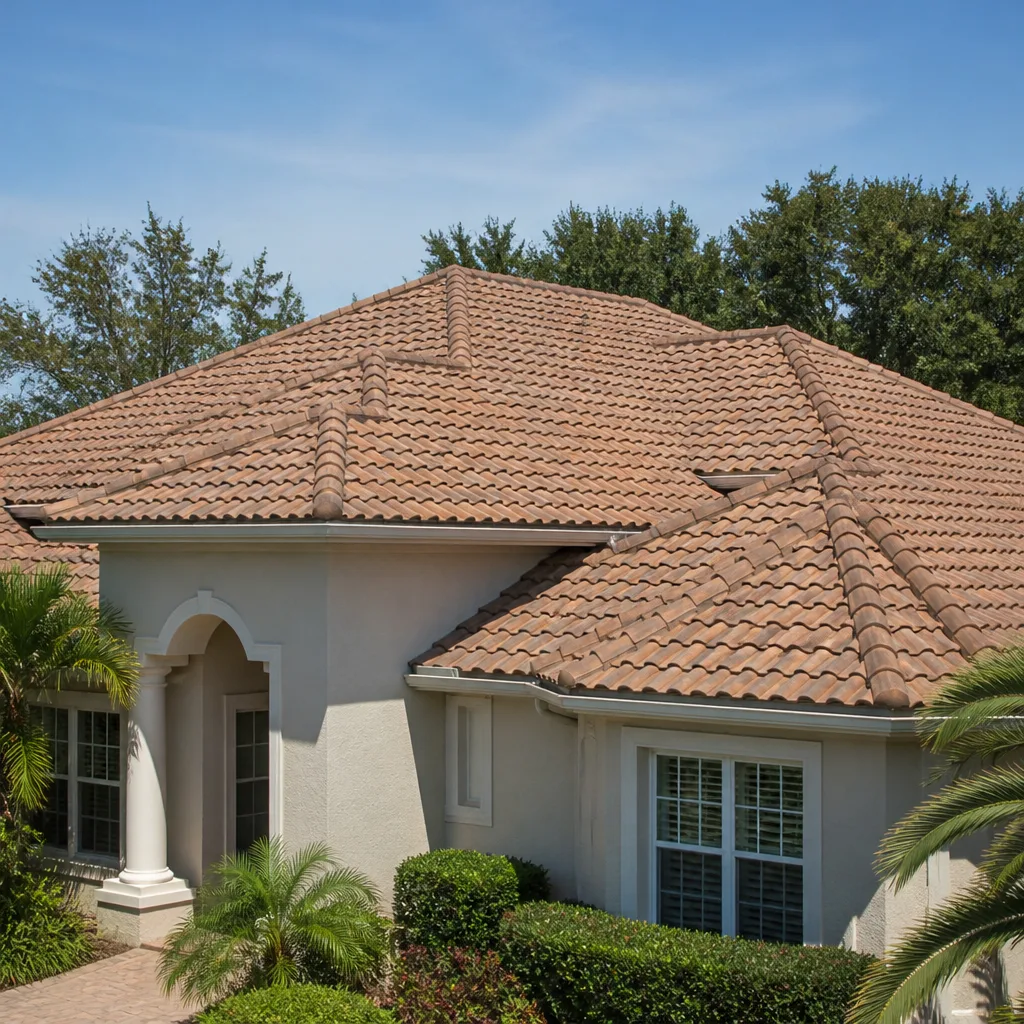
Tile roofs: Concrete and clay tile are common across Ventura, especially in the hillside neighborhoods. The tile itself can last 50 years or more, but the underlayment beneath it does not. Underlayment on a tile roof typically lasts 20 to 30 years, and salt air in coastal Ventura pulls that number down. The warning sign to watch on a tile roof is not on the tile surface. It’s inside: stains at ceiling corners, musty attic smells, or visible water tracks on the underside of the decking. Tile that looks beautiful on top can be hiding a spent underlayment below.
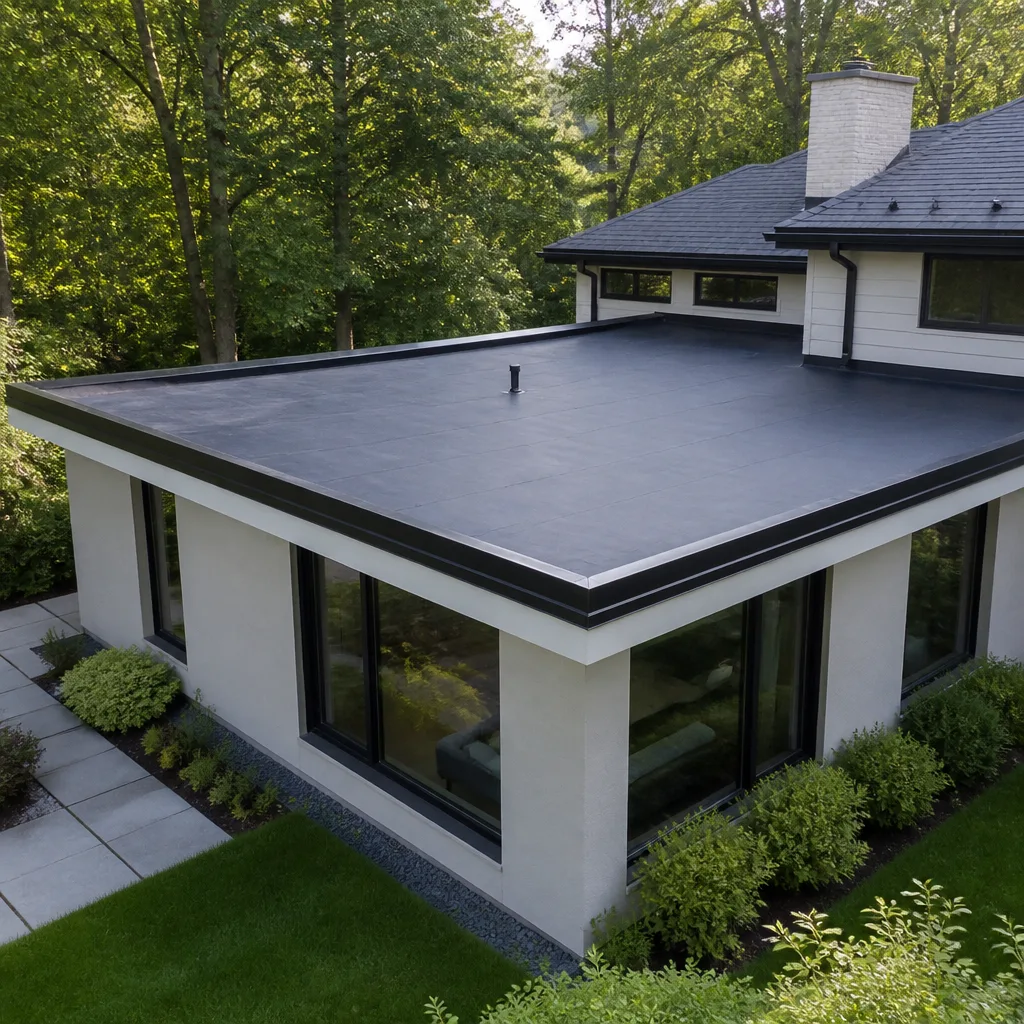
Flat and low-slope sections: Many Ventura homes, especially those built as architectural styles in the 1960s and later, have flat or low-slope sections over porches, garages, or added rooms. These sections use rolled membranes, not shingles. Signs of failure on flat sections include visible ponding after rain, blistering or bubbling in the surface, and cracked seams at the penetrations. Any ponding that lasts more than 48 hours after rain is shortening the membrane life, and in Ventura’s salt air, the membrane edges around the parapets are usually the first to go.
Metal roofs: Standing seam metal roofs last longest of all, but the exposed fasteners on older metal roofs are the weak point. Neoprene washers under screw heads dry out and crack in salt air after 10 to 15 years. The warning sign is a fastener head that looks lifted or a dark ring around the screw hole. A metal roof that’s well attached and flashed will outlast almost anything else in Ventura, but the fasteners need periodic replacement, and fewer homeowners know to check them.
Common Mistakes to Avoid
- Assuming a new roof means no problems. The most common leak we see on Ventura homes with roofs under five years old is flashing failure at the penetrations. A new roof with improperly sealed pipe boots, skylights, or valleys will leak faster than an old roof with good flashing. Newness is not protection.
- Waiting for a ceiling stain before investigating. By the time water reaches the ceiling drywall, it has already passed through the decking, insulation, and often a section of the structural framing. A stain is a late-stage signal. Musty attic smells and granule patterns are earlier, less expensive warnings.
- Ignoring the sheltered sides of the roof. Homeowners in Ventura tend to focus on the sunny, visible planes facing the street. Damage often develops on the shaded north and east faces where moisture lingers in the marine layer. Check all four sides annually.
- Using a silicone sealant as a flashing repair. Painting a silicone bead along a lifted flashing seam may seal it for one season, but it also compounds the problem by trapping moisture behind the flashing. When the sealant eventually fails, the trapped corrosion has advanced further than if the metal had been left exposed.
- Making judgments from a satellite photo. Aerial imagery shows missing shingles and obvious color differences, but it cannot show flashing lift, nail rust in the attic, or valley wear. Ground-level and interior checks are irreplaceable.
- Delaying a written assessment because you’re afraid of the answer. We’ve walked homeowners through hundreds of assessments in Ventura, and the report is often less dramatic than the fear. A written price before any work starts means you know the facts in dollars, and you decide with clear information rather than a handshake’s worth of guesswork.
When to Call a Professional
Call a professional when you see directional granule loss with bare asphalt visible, when flashing has lifted visibly from any wall or chimney penetration, when a musty attic smell persists through August and September, or when a top-floor ceiling corner shows any new discoloration after rain. These conditions mean water is either entering the roof system now or will be soon. You also need a written assessment when buying or selling a home in Ventura, when a roof is over 15 years old and you have no maintenance records, or when you want a documented baseline of roof condition before making any other home improvements. Roof Repair in Ventura starts with a written assessment and a written price, so you’ll know the exact scope and dollar amount before any work is authorized. Birchbark Roofing Ventura offers free estimates in Ventura, call (350) 240-5534.
Frequently Asked Questions
Most roofing companies in Ventura, including Birchbark Roofing Ventura, provide a written estimate at no cost. The estimate includes a visual inspection of the roof from the ground and roof edge, documentation of the visible condition issues, and a written price for any recommended work, always provided before any work starts. Call (350) 240-5534 to schedule a free estimate.
Inspect your roof from the ground twice a year in Ventura: once in early fall before the rainy season begins, and once in late spring after the rains have stopped and the marine layer has started its summer pattern. Our Seasonal Roofing Care for Ventura: Year-Round Homeowner’s Guide breaks down exactly what to check each season. Homeowners within two miles of the coast should add a visual check of the west-facing flashing every three years, ideally from the ground with binoculars or a phone camera.
A small, evenly distributed amount of granules in the gutters is normal aging for a roof over ten years old. Heavy granule accumulation, especially if it concentrates on the south and west roof planes or repeats after consecutive rains, indicates the shingles are shedding their UV-protective surface faster than normal and the roof is entering its active failure phase.
An architectural asphalt shingle roof in Ventura typically lasts 20 to 25 years, while a three-tab shingle roof lasts 15 to 18 years. Salt air within two miles of the coast shortens both estimates by several years. Tile roofs often last 50 years or more on the surface, but the underlayment beneath them usually needs replacement at 20 to 30 years.
Not at Birchbark Roofing Ventura. Every job includes a written price in dollars before any work begins, and that price is always provided, never negotiated away. You’ll know exactly what the work costs before our background-checked, uniformed technicians arrive, and you’ll receive a photo of the completed clean-up before the crew leaves.
You can, and homeowners do it every year in Ventura, but it’s a temporary fix that lets the underlying roof problem continue developing. The stain will return when the next rain cycle arrives, usually larger than before, because the water entry point has been widening the entire time. The only way to stop the cycle is to address the source on the roof, and that starts with a written assessment. Call (350) 240-5534 for a free estimate.
The Bottom Line
Ventura homeowners who catch roofing problems early save thousands, and catching them early means looking at the signs most guides skip: the August attic smell, the west-facing granule pattern, the green crystallization on copper flashing folds, the corner stain that’s actually a flashing lift. These are the signals that precede the missing shingles and the ceiling drip. The most practical habit you can build is a twice-yearly ground-level walkaround, plus a quick attic check in late summer when the marine layer is doing its work. And when you see something that worries you, get it in writing before you decide. For more guides & resources, visit our blog. Written by Erik Lindgren, Owner at Birchbark Roofing Ventura, serving Ventura since 2000.
See the difference
 Before
 After
After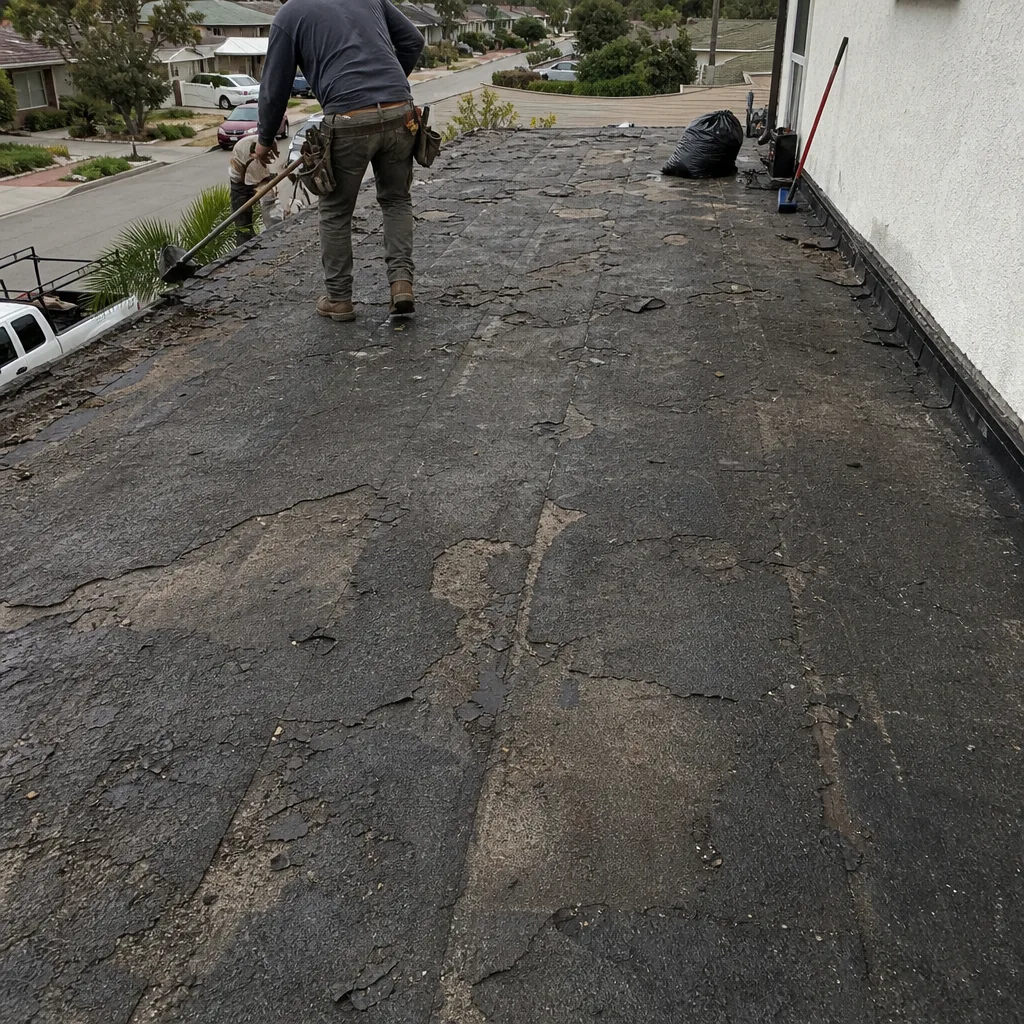 Before
 After
After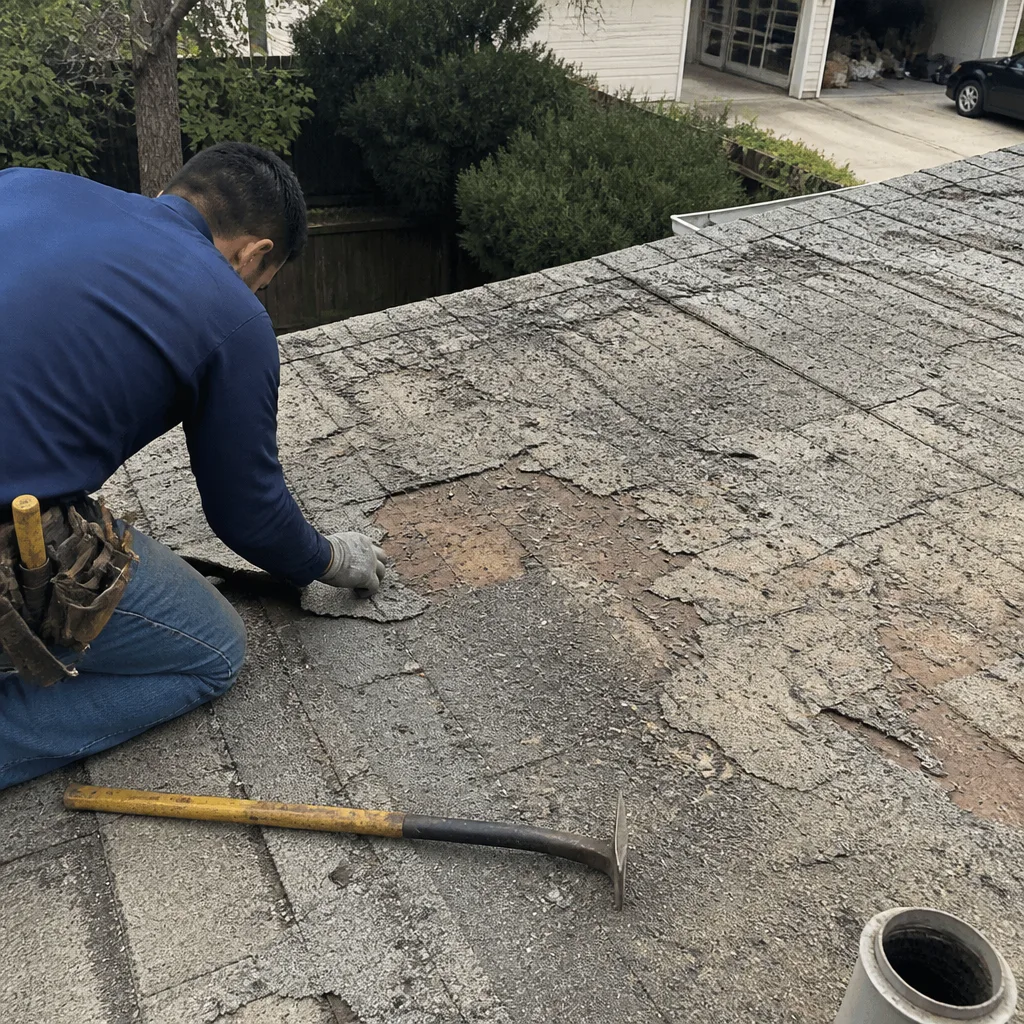 Before
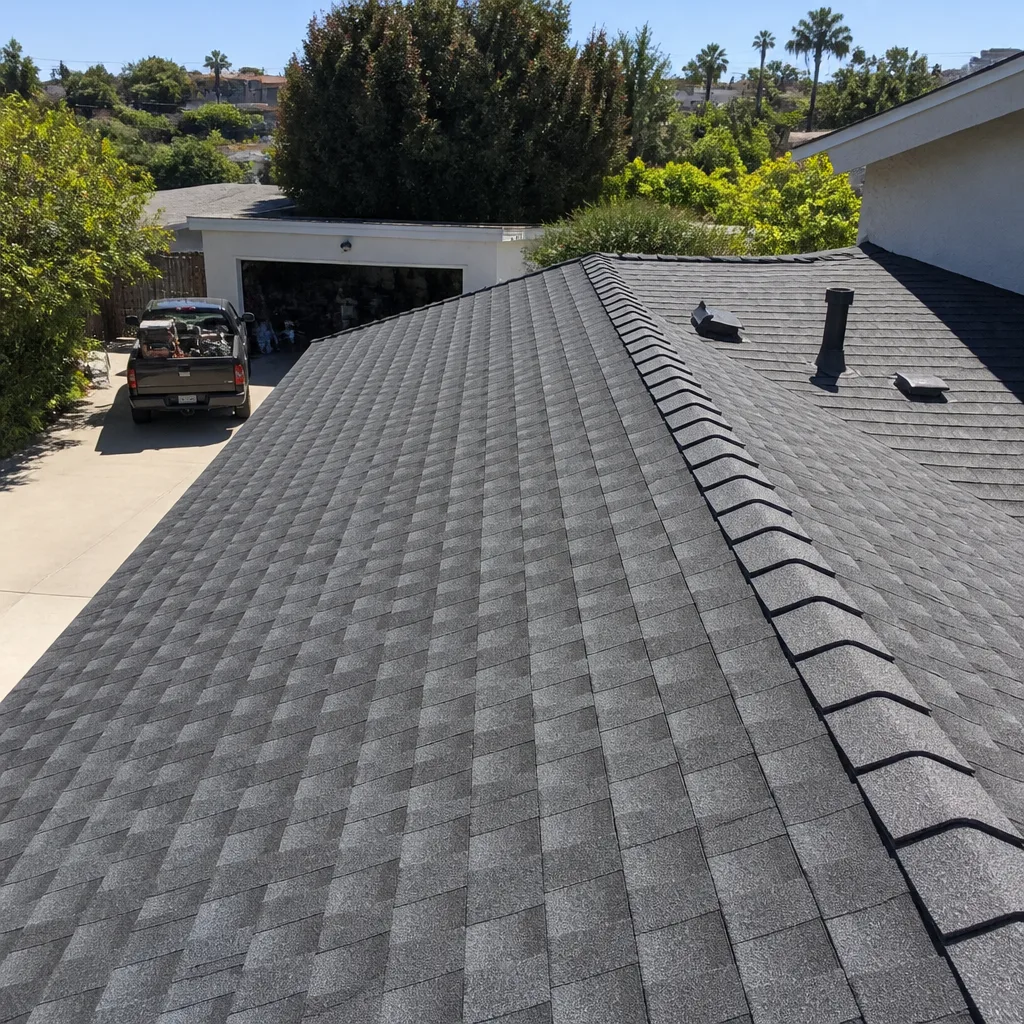 After
After